
AI for Restaurants: A Practical, No-Nonsense Guide
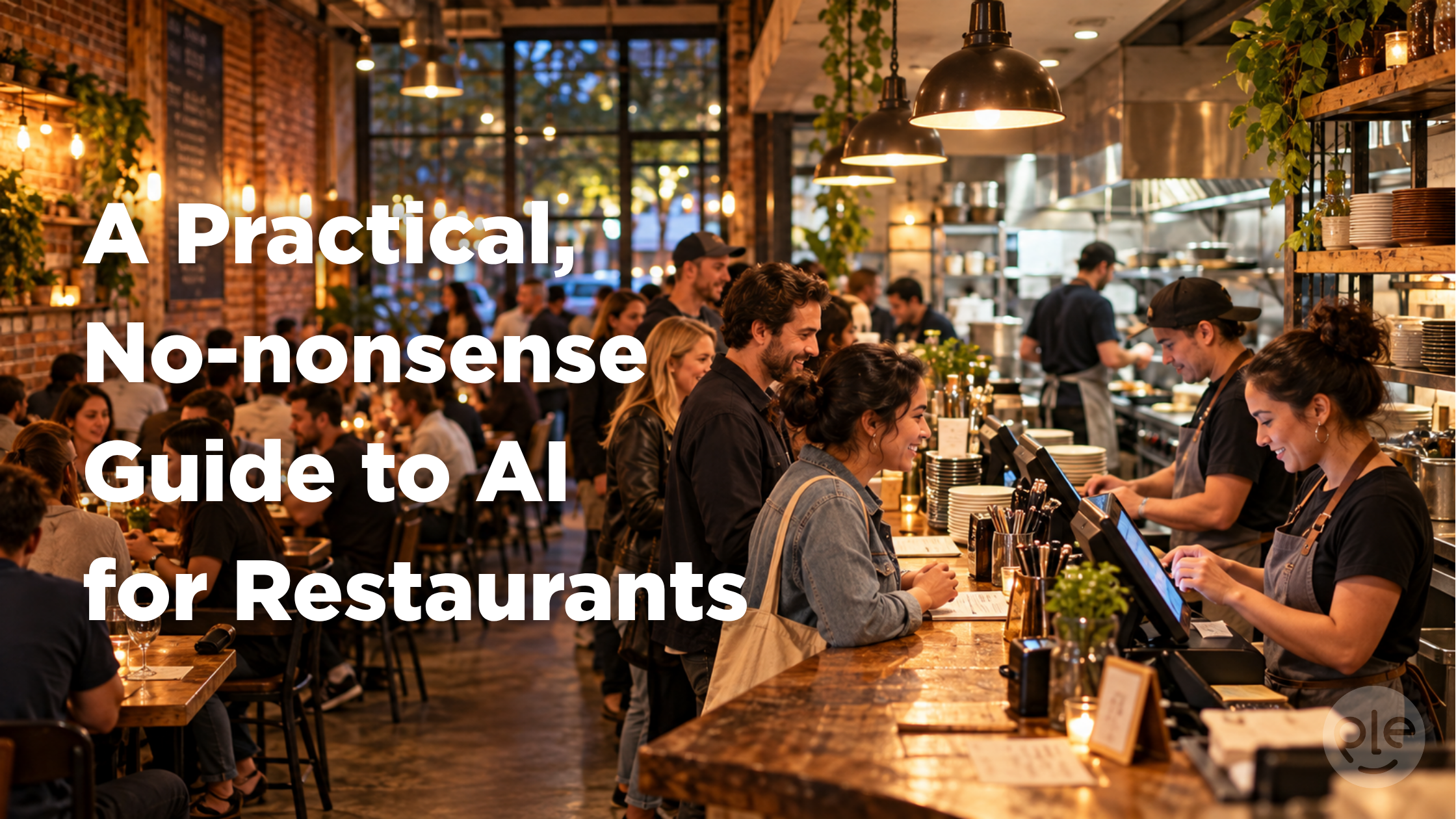
It’s 6:30 on a Friday night.
The dining room is filling up. The phone is ringing. Online orders are coming in. Someone needs a manager. Another guest wants to know whether an item can be modified.
And somewhere in the middle of all that, you’re supposed to think about tomorrow’s prep, next week’s promotion, and whether anyone remembered to post on social media.
When restaurant operators hear the words artificial intelligence, this probably isn’t the first picture that comes to mind. AI for restaurants can sound futuristic, complicated, or like another piece of technology operators are expected to figure out.
In practice, the most useful restaurant AI is usually much less dramatic. It’s about taking some of the repetitive work off your plate, helping your team respond faster, and making an already busy restaurant a little easier to run.
What Does AI Mean for Restaurants?
For restaurants, using AI doesn’t have to mean robots in the kitchen or rebuilding your operation around entirely new technology.
More often, AI is becoming part of the restaurant technology operators already use. It can help automate repetitive tasks, surface useful information faster, make recommendations, and give teams more time to focus on the parts of the business that require judgment, experience, and hospitality.
Take the phone. It rings while your front-of-house team is helping a line of guests. Today, that call may go unanswered or force someone to step away from the guests in front of them.
With AI ordering technology, that call can potentially be handled without pulling an employee away from service. The guest still calls the restaurant, asks questions, and orders the way they’re comfortable ordering. Your team simply doesn’t have to stop what they’re doing to capture every order.
The same idea can apply elsewhere in the restaurant:
Reporting: Surface useful sales trends without digging through reports.
Customer retention: Make loyalty and offers more relevant to each guest.
Marketing: Keep your restaurant visible without starting every campaign from scratch.
Ordering: Help guests find what they want and complete an order more easily.
The technology may change. The goal doesn’t: make the restaurant easier to operate and the guest experience easier to navigate.
Will AI Replace Restaurant Employees?
It shouldn’t. Hospitality is personal.
You remember the regular who just got back from a trip, the family that celebrates every birthday with you, and the guest who needs a little extra attention. Technology can’t replace that context, and it shouldn’t try to.
A better use of AI is handling some of the repetitive work surrounding those moments. An AI ordering tool, for example, might handle a straightforward phone order while still giving a guest a way to reach an employee when the conversation becomes more complicated.
An AI marketing tool might help draft a promotion or identify which customers are most likely to respond, while the restaurant still controls the offer, brand, and message.
AI is most useful when it creates more room for hospitality, not when it gets in the way of it.
Think assist, not replace.
Is AI for Restaurants Complicated?
It doesn’t have to be. Restaurant operators shouldn’t need to become AI experts to benefit from AI.
In many cases, artificial intelligence will simply become another capability built into the restaurant technology businesses already use.
42% of restaurant operators experimenting with AI say they’re doing so through their technology vendors rather than implementing tools on their own.
That approach is already becoming common. Recent industry research also shows that restaurant operators are increasingly experimenting with AI through the systems they use to run their businesses.
There was a time when restaurants had to decide whether they needed a website, then online ordering, third-party delivery, digital loyalty, text marketing, QR codes, digital menus, and plenty of other technologies that eventually became part of everyday restaurant operations.
AI is likely to follow a similar path. The most useful versions won’t feel like another technology project. They’ll simply make existing restaurant tools more capable.
How Can Restaurants Use AI?
AI can help restaurants, especially when it is applied to a specific job rather than treated as a solution for everything.
Here are several areas where AI restaurant technology is already starting to support everyday operations.
Front of House
AI can help answer common guest questions, assist with reservations or ordering, and handle routine conversations when employees are busy serving the guests already in front of them.
That can be especially valuable during peak periods, when every interruption matters.
AI Ordering for Takeout and Delivery
AI ordering technology can help guests navigate the menu, answer common questions, recommend relevant add-ons, and complete an order across phone, web, text, and other digital channels.
Done well, the technology should make ordering easier without making the experience feel complicated.
Back-of-House Operations
Restaurants generate a lot of operational data. AI can help operators make sense of sales patterns, inventory, labor, forecasting, and other information that would otherwise take valuable management time to analyze manually.
The goal isn’t more reports. It’s getting to the useful information faster.
Menu Optimization
Your restaurant menu produces more information than you might realize. What gets viewed? What gets ordered? What gets skipped? Which items are commonly purchased together? Where do guests drop off?
AI can help identify opportunities around menu placement, upsells, combinations, images, and the overall ordering experience. That can turn everyday ordering data into practical decisions about how you merchandise your menu.
Loyalty and Restaurant Marketing
Not every regular visits at the same frequency, orders the same food, or responds to the same promotion.
AI marketing tools can help restaurants use customer behavior to make loyalty rewards, offers, and communication more relevant. Instead of sending every customer the same message, restaurants can begin using the information they already have to communicate more intelligently.
Social Media
For many independent restaurants, the challenge with social media isn’t knowing that they should post. It’s finding the time to do it consistently.
AI can help with content ideas, first drafts, scheduling, review responses, and other repetitive tasks involved in maintaining an active online presence. Your restaurant still provides the personality. The technology helps with the workload.
How Should a Restaurant Get Started With AI?
Don’t start with AI. Start with a problem you already recognize.
The phone keeps ringing during the rush.
Could AI ordering technology help capture more of those orders without pulling employees away from guests?
Creating promotions takes too much time.
Could your customer data help identify who to target and what offers are worth sending?
It’s hard to know what’s working on the menu.
Could your ordering data make those decisions easier?
Social media keeps falling to the bottom of the list.
Could part of the planning, writing, or scheduling be handled for you?
That is a much more useful way to evaluate AI than asking, “How can we use AI in our restaurant?” Start with the operational problem, then determine whether the technology actually solves it.
You don’t need to automate the whole restaurant. You don’t need every new AI tool. And you don’t need to change the way you take care of your guests.
Start with one real problem. Keep your team in control. Measure whether the technology saves time, improves the guest experience, increases revenue, or makes the operation easier to manage.
If it does, keep going.
That’s when AI stops feeling like another technology trend and starts becoming a practical restaurant tool.